
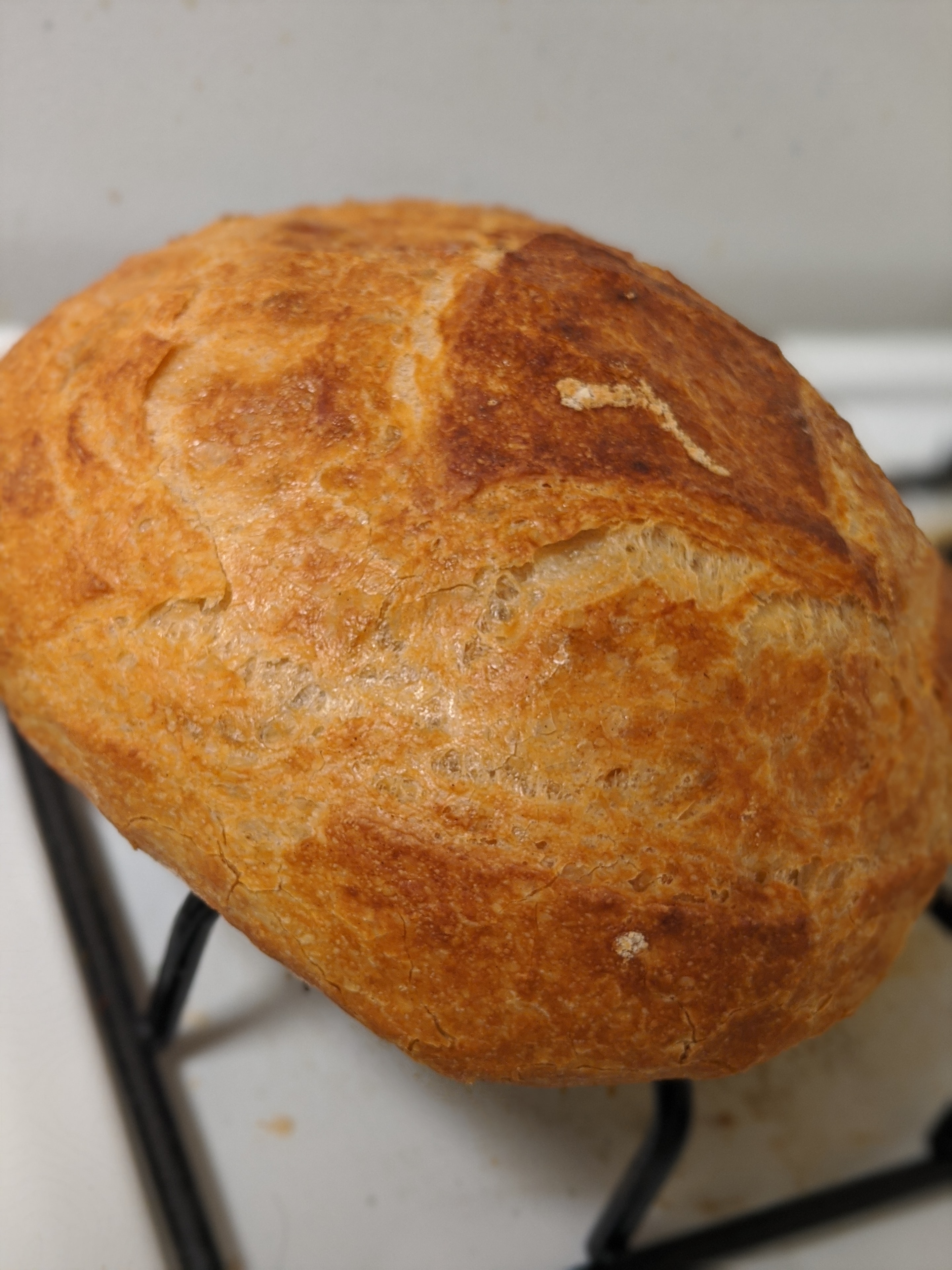
Third Pillar
Bread
Four ingredients. No kneading. A loaf that will change how you think about food.
Where it started
Bread is easier than you think.
Most people assume bread is complicated. That it requires skill, equipment, hours of effort, and some kind of inherited knowledge passed down through generations. That assumption keeps a lot of people from ever trying.
I was one of those people — until I came across Jim Lahey's no-knead bread recipe. It changed everything. The idea is almost absurdly simple: mix flour, yeast, salt, and water, leave it alone overnight, and bake it in a Dutch oven. That's the whole recipe. No kneading, no stand mixer, no special technique.
The first time I pulled that loaf out of the oven — golden crust, open crumb, smelling like a proper bakery — I couldn't believe I had made it. And more importantly, I couldn't believe how easy it had been.
Why bother?
Store-bought bread is not real bread.
Four ingredients
Real bread is flour, water, yeast, and salt. Read the label on a supermarket loaf and count how many ingredients you don't recognise.
No preservatives
Homemade bread goes stale in a few days because it has nothing artificial keeping it soft. That's a feature, not a flaw.
You know what's in it
When you make your own bread, there are no surprises. No seed oils, no dough conditioners, no high-fructose corn syrup. Just food.
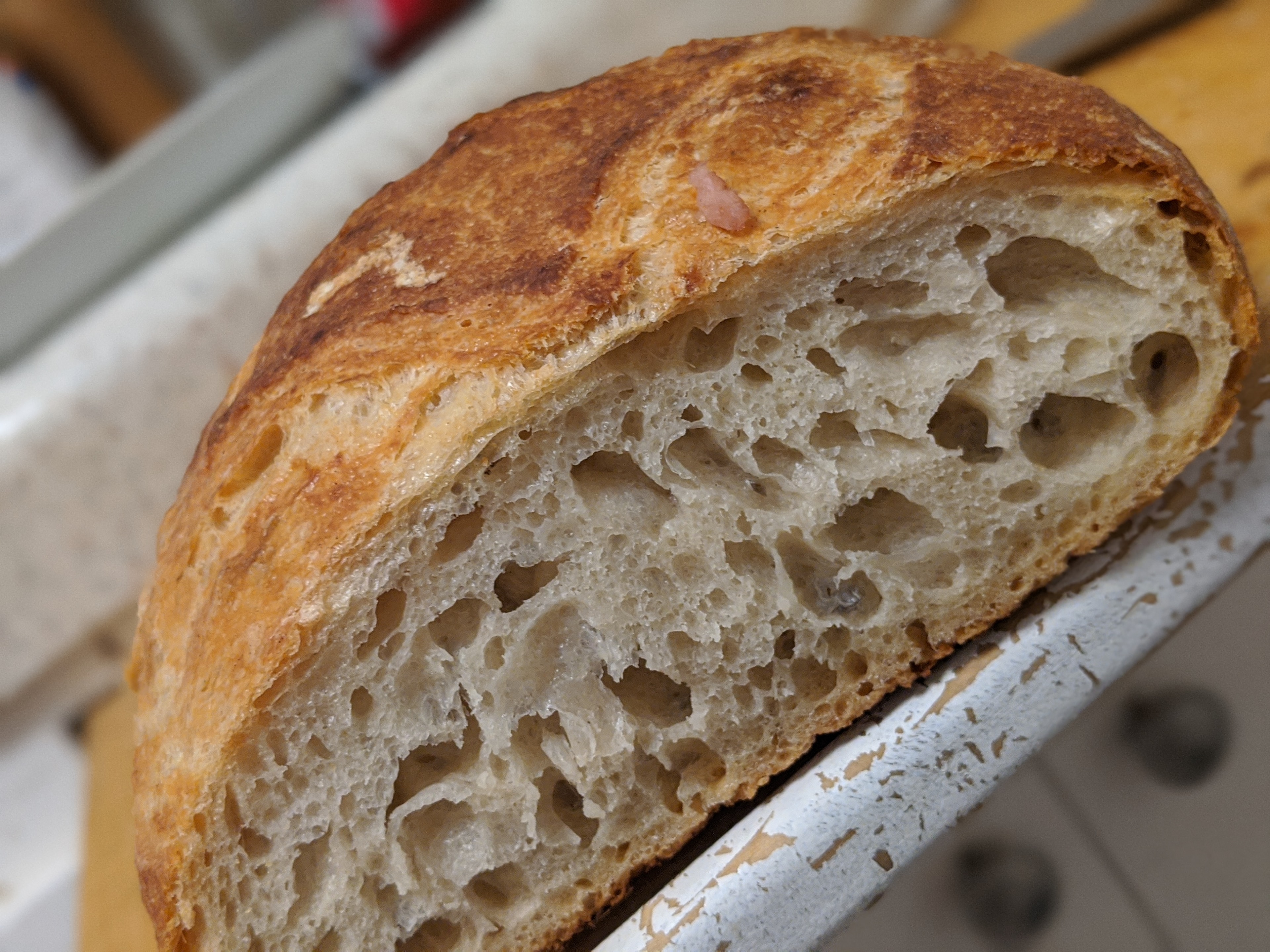
The recipe that started it all
Jim Lahey's
No-Knead Bread
The gateway recipe
Jim Lahey's No-Knead Bread
Jim Lahey is the founder of Sullivan Street Bakery in New York. In 2006, his no-knead recipe was published in the New York Times and it quietly changed home baking forever. The technique uses a very small amount of yeast and a very long fermentation time — the dough does the work while you sleep.
The Dutch oven is the other key. It traps steam during the first part of baking, mimicking the professional steam-injected ovens that bakeries use. The result is a crackling, blistered crust that you simply cannot get any other way at home.
Once I made this bread and understood why it worked, everything else became easier. The confidence that comes from pulling off a perfect loaf is real — and it carries over into every other bread you try.
The recipe
Five steps. That's the whole thing.
You will need: 3 cups all-purpose flour · ¼ tsp instant yeast · 1¼ tsp salt · 1½ cups water · A Dutch oven
Mix
Combine 3 cups flour, ¼ tsp instant yeast, 1¼ tsp salt, and 1½ cups water in a bowl. Stir until a shaggy dough forms — no kneading, no effort.
Rest
Cover the bowl with plastic wrap and leave it on the counter for 12–18 hours. The long rest does all the work yeast and time are better kneaders than hands.
Shape
Turn the dough onto a floured surface. Fold it over itself a couple of times, shape it into a ball, and let it rest another 15 minutes.
Second rise
Place the dough on a floured towel, dust the top, fold the towel over it, and let it rise for 2 more hours until it looks puffy.
Bake
Heat your Dutch oven in a 450°F oven for 30 minutes. Drop the dough in, bake covered for 30 minutes, then uncovered for 15. That's it.
"The first loaf I made from this recipe gave me more confidence in the kitchen than anything else I had ever cooked."
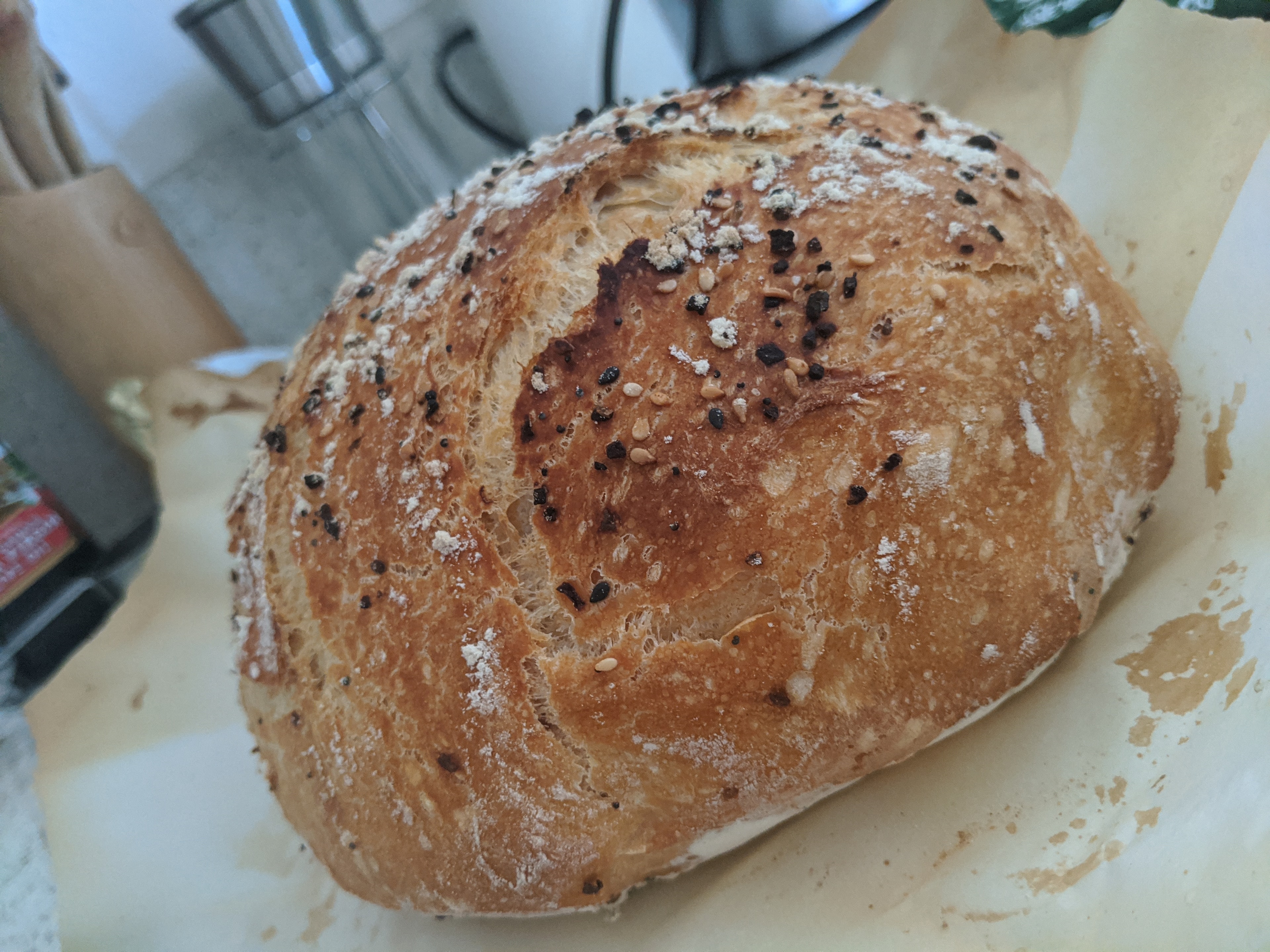
Four ingredients. Infinite possibilities.
What happens next
One recipe opens the door to everything else.
Once I had the no-knead loaf dialled in — once I understood how dough feels when it's properly fermented, how a Dutch oven creates steam, how to tell when a crust is done — something shifted. The fear was gone.
Bread stopped being a mystery and became a craft. And like any craft, once you have the fundamentals, you can start to explore. I started making buns for burgers. Then soft pretzels. Then English muffins cooked on a griddle. Each one built on what I already knew.
None of them were as hard as I expected. That's the thing about bread — the difficulty is mostly in your head. The actual work is minimal. What takes time is the dough, and the dough doesn't need you watching it.
Where the confidence took me
What I started making next

Buns
Once you understand how dough behaves — how it rises, how it feels when it's ready — shaping individual buns becomes intuitive. Soft, pillowy, and far better than anything from a bag.

Pretzels
The same basic dough, shaped differently and dipped in a baking soda bath before baking. That bath is the secret to the chewy crust and deep brown colour. Once you know the trick, pretzels are surprisingly simple.
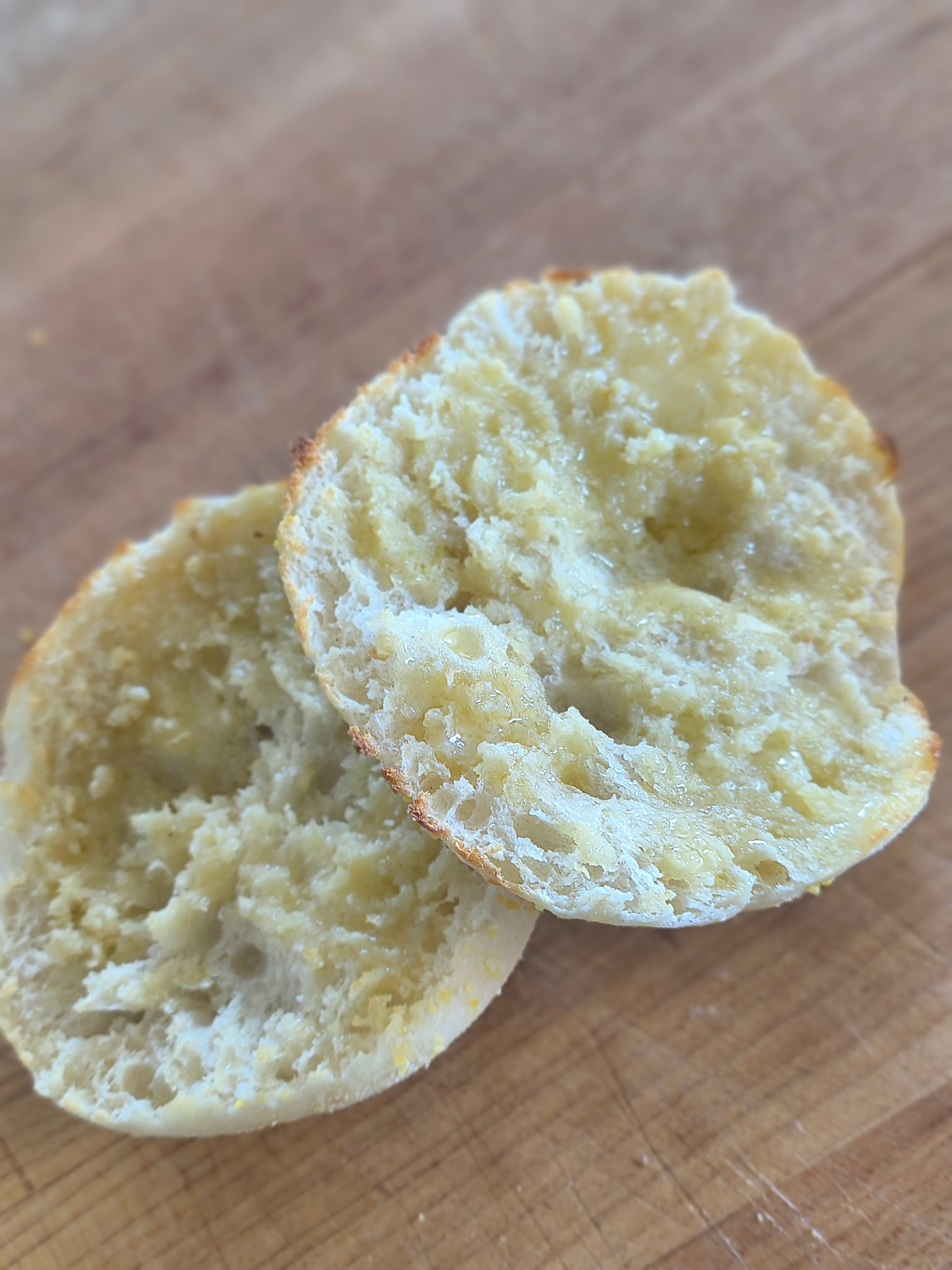
English Muffins
Cooked on a griddle rather than baked in an oven. The result is those signature nooks and crannies that no store-bought version ever quite gets right. A revelation when you make them yourself.
From my kitchen
Every loaf is an experiment.
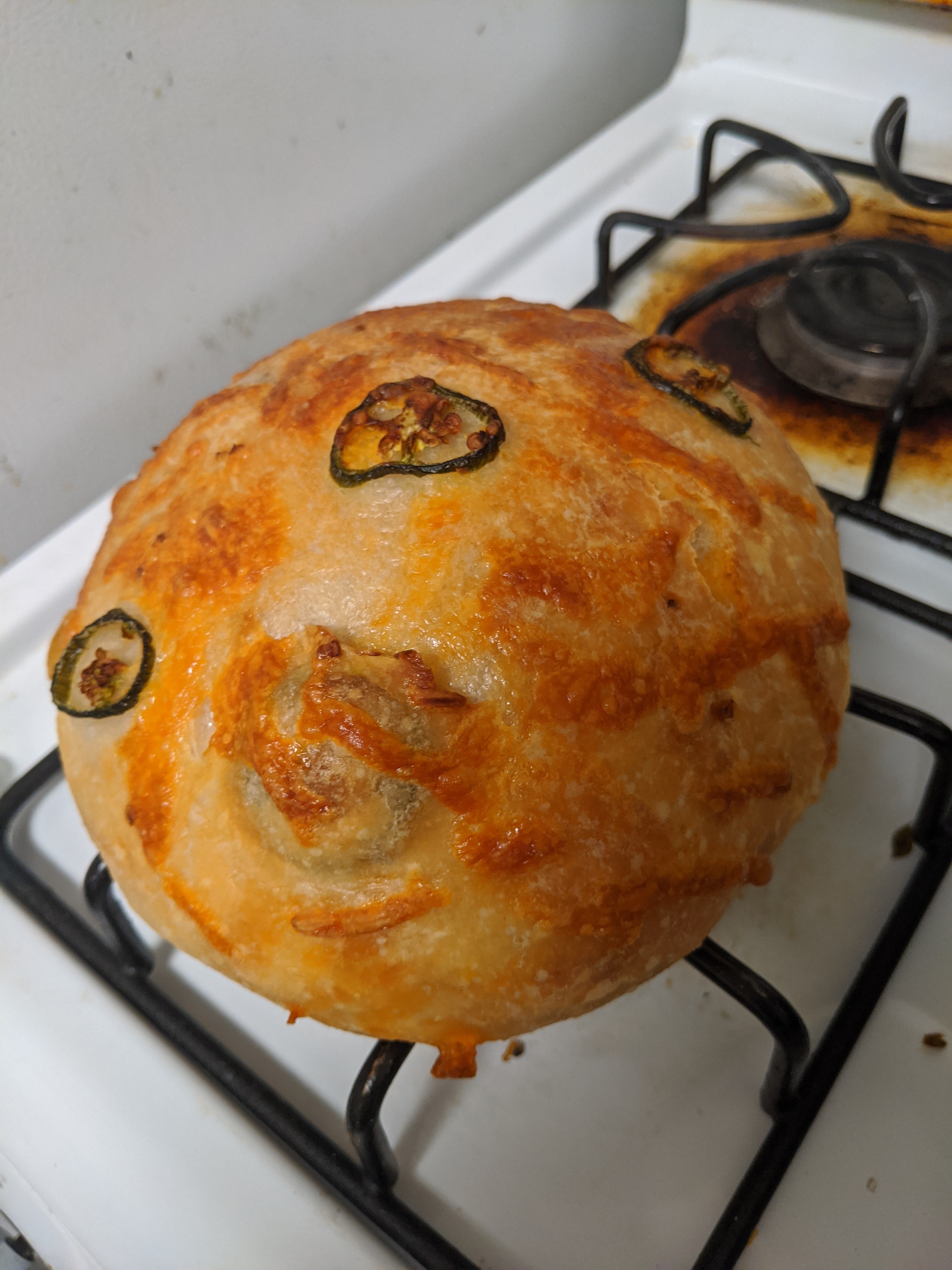
Jalapeño loaf
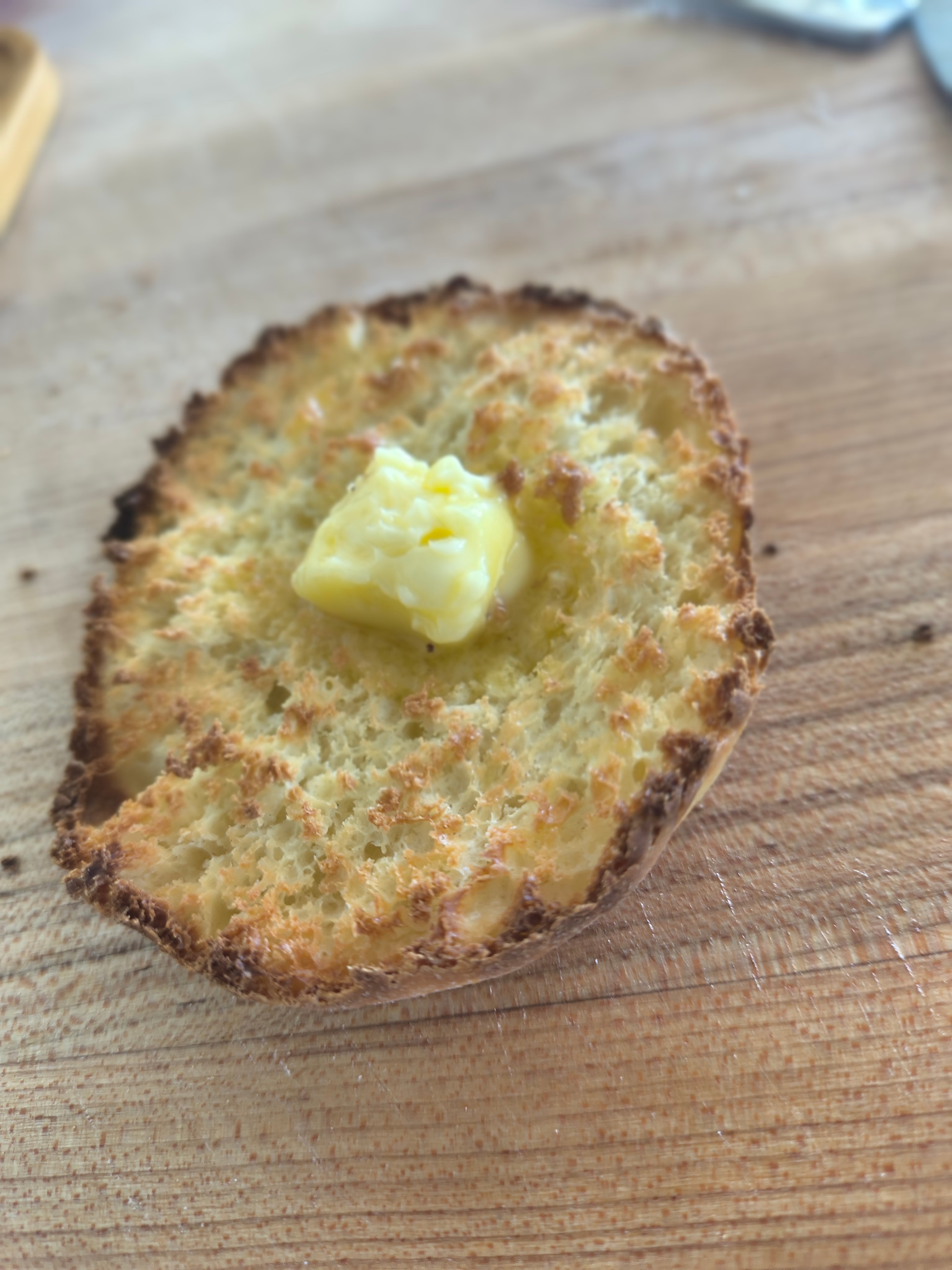
Fresh toast with butter
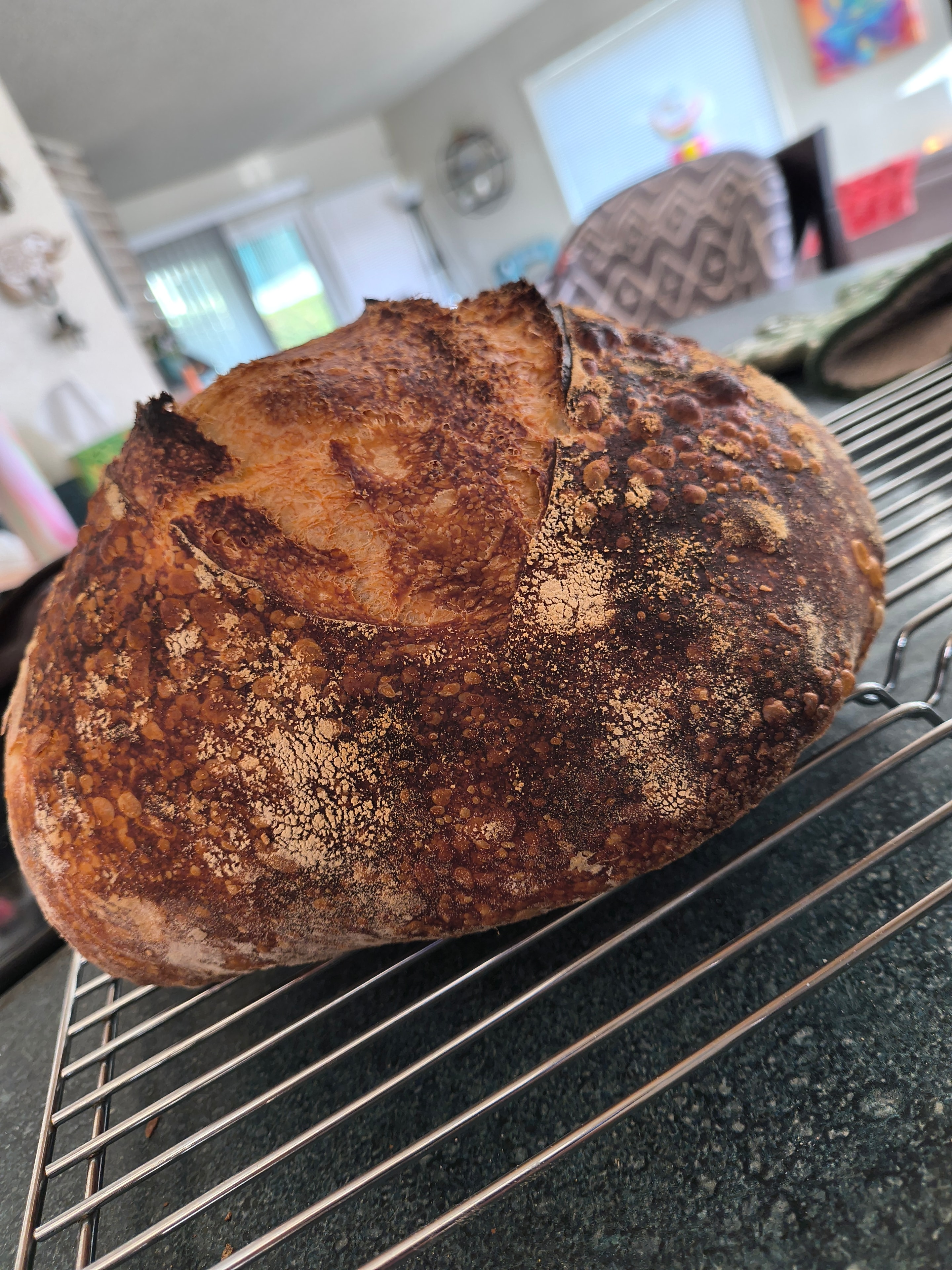
Dark crust — long bake
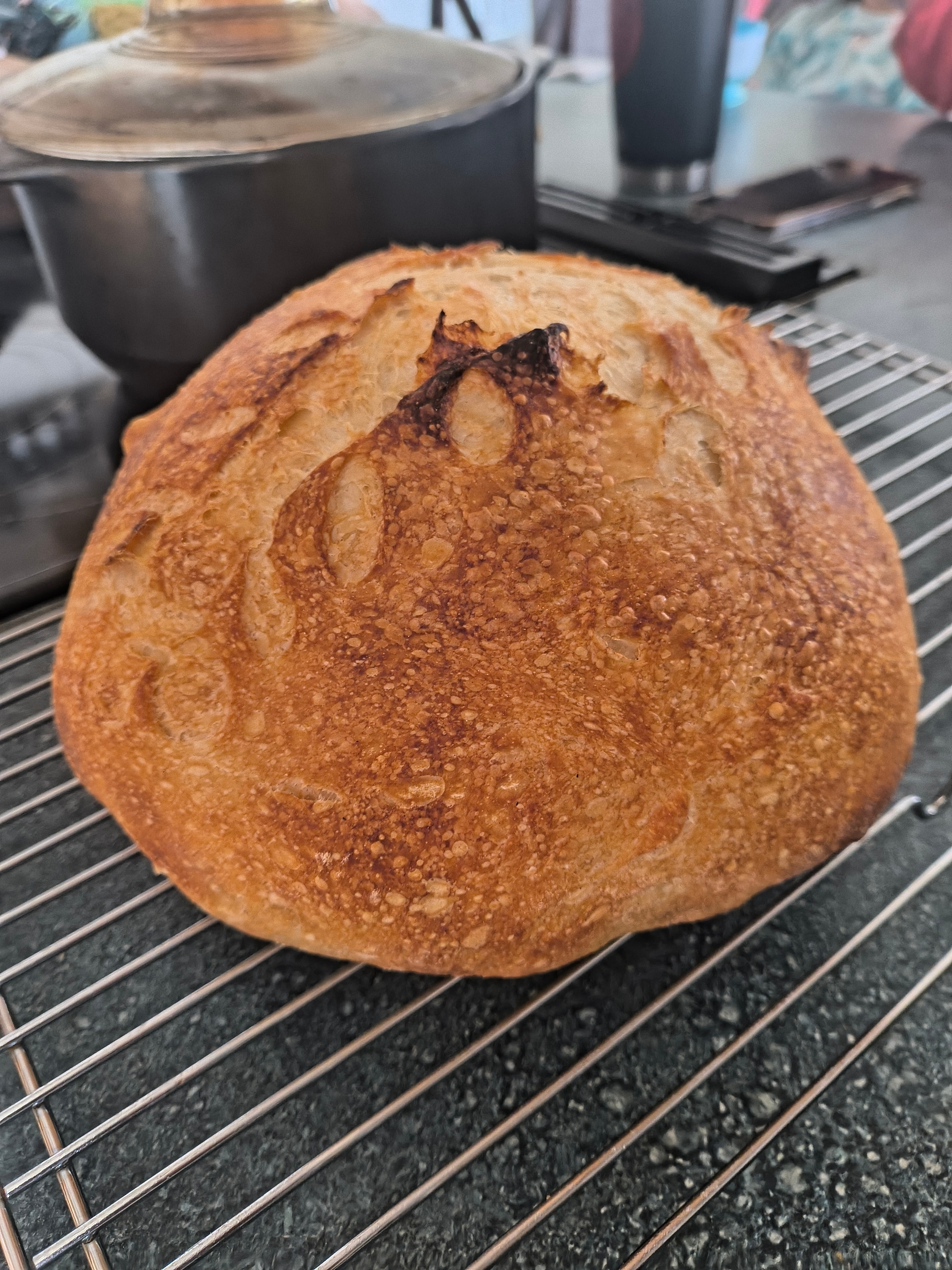
Sesame seed loaf
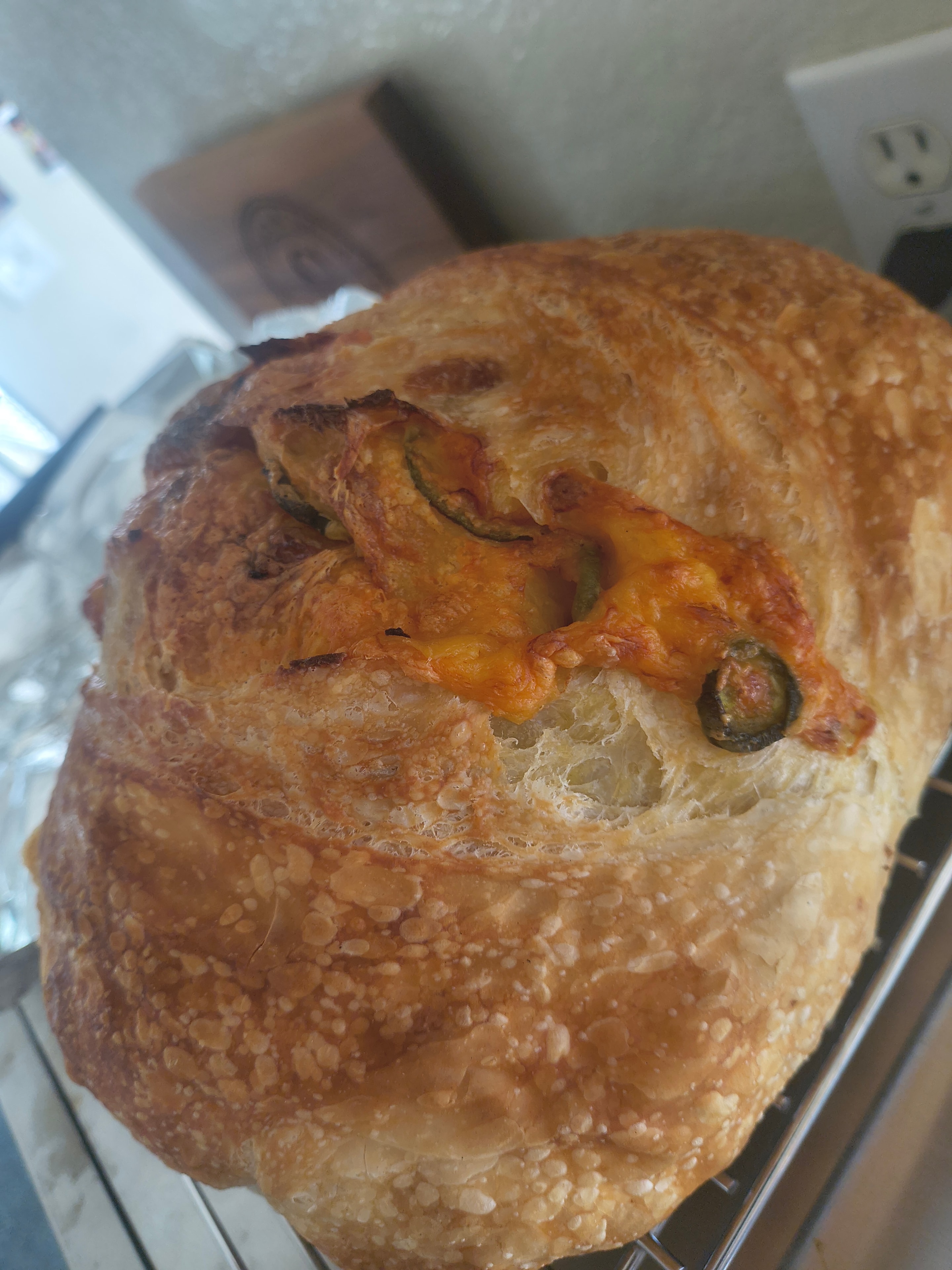
Jalapeño cheddar
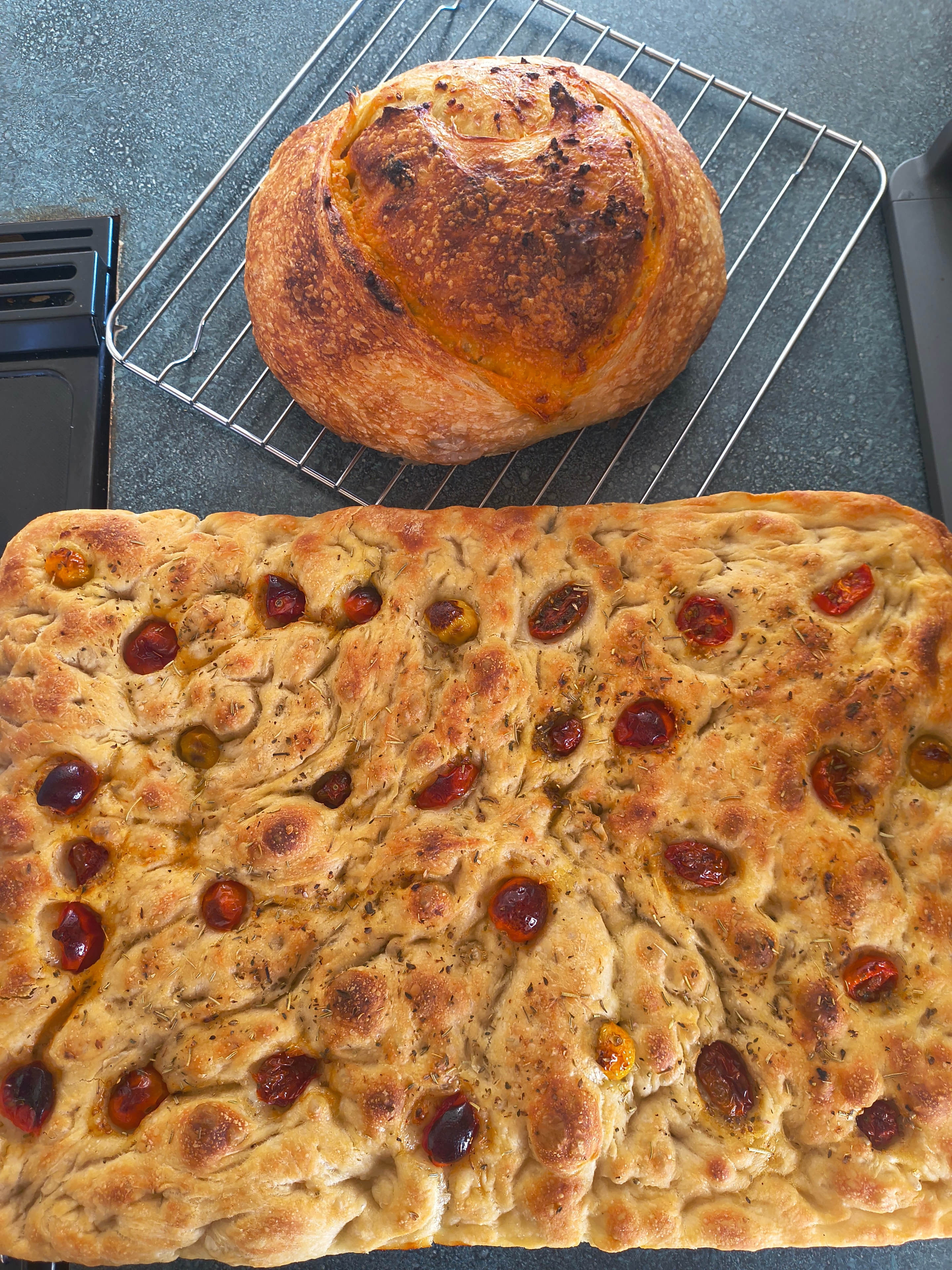
Loaf & tomato focaccia
Start here
Make the no-knead loaf first.
Don't start with sourdough. Don't buy a stand mixer. Don't watch a hundred YouTube videos. Mix four ingredients tonight, go to sleep, and bake it tomorrow morning. Everything else follows from that first loaf.
Your shopping list
- All-purpose flour (a 5 lb bag will last you many loaves)
- Instant yeast (a small jar keeps for months in the fridge)
- Kosher or sea salt
- A Dutch oven with a lid (cast iron is ideal)
- That's it.